Service
Podiatry in Goulburn.
Our podiatrists are AHPRA-registered and treat foot, ankle, and lower-leg problems. Heel and forefoot pain, diabetic high-risk foot care, walking assessment and orthotics, nail surgery, sports injuries, and kids' feet.

Why podiatry
What podiatry actually does.
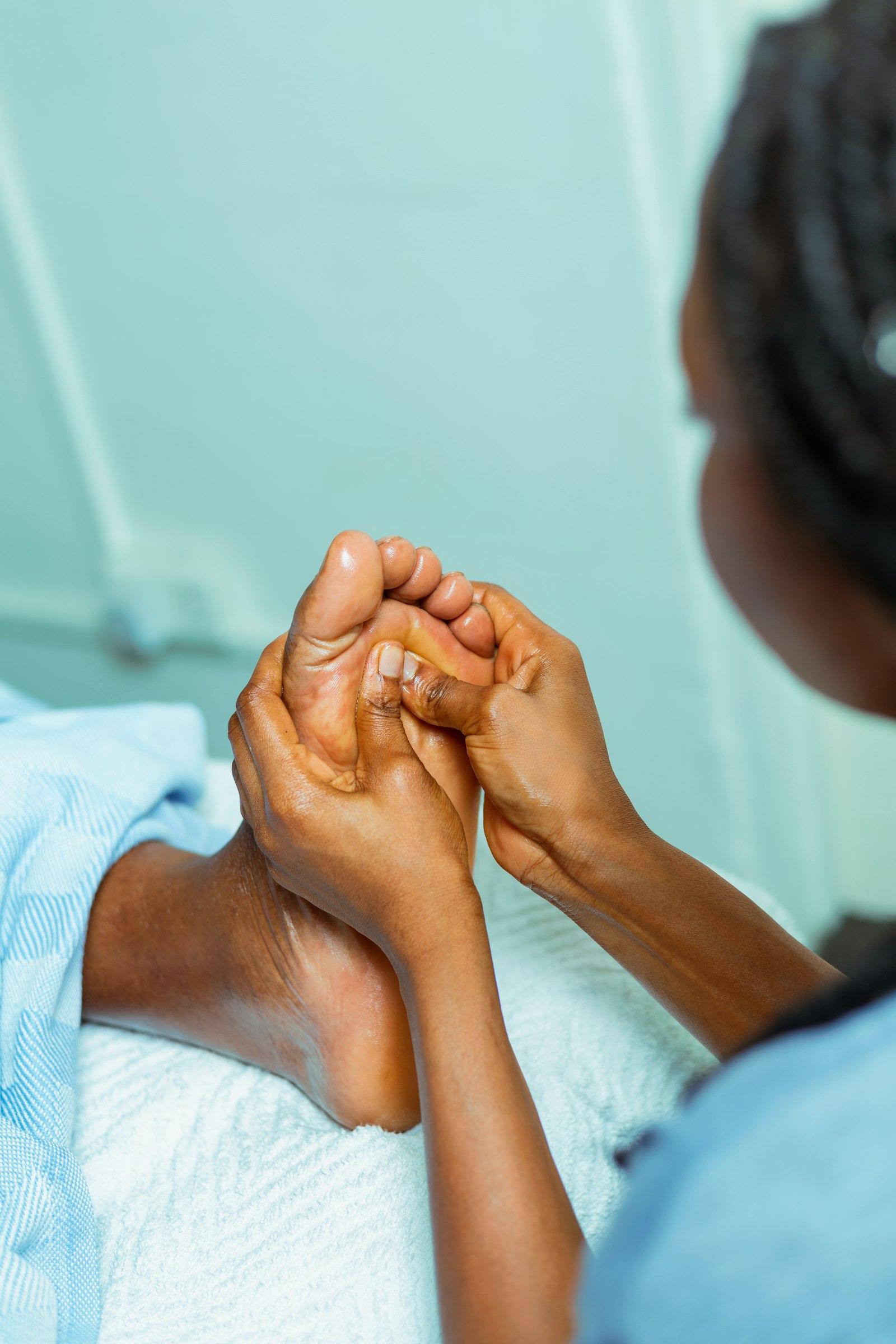
Podiatrists are who you see for feet, ankles, and lower legs — skin and nails through to how you walk. We do in-room treatment, nail surgery under local anaesthetic, orthotics, and wound and offloading care for at-risk feet.

What we treat
What we see in clinic.
- Heel and arch painplantar fasciitis, sore heel pad, tendon pain
- Diabetic foot careyearly check, ongoing review, wound monitoring
- Sports and overuse injuriesrunners, footy players, walkers, hikers
- Kids' feetwalking concerns, growing pain, pigeon-toed, flat feet
- Skin and nailscorns, calluses, thick nails, fungal nails
- Ingrown toenailsconservative care and minor nail surgery
- Orthoticsassessment, prescription, fitting, and review
- Bunions and forefoot painconservative care and footwear advice
- Footwear advicerunners, work boots, school shoes, after surgery
- Foot care after lower-leg surgeryoffloading, dressings, building back up
How it works
How your appointment runs.
Your first podiatry appointment starts with a chat — what's going on, how it started, your medical history, medications, and what your feet need to handle day to day. Then a proper check: skin and nails, how the joints move, muscle testing, nerve and circulation checks where needed, a look at your shoes, and watching how you walk standing still and moving.
Book in
Online or call us. Tell us what's going on, and bring the shoes you wear most.
First appointment
We assess your feet, check how you walk, and treat in the room.
Ongoing care
Reviews at the right interval for your case.
Funded under
Schemes that cover podiatry.
Common questions
Questions we get asked a lot.
What's involved in a diabetic high-risk foot check?
Feeling tested with a 10g filament and tuning fork, circulation checked, skin and nails inspected, and a shoe check. We grade your risk against the international standards for diabetic foot care — that sets your next review and tells us when to send you to vascular or endocrine if needed.
What happens during nail surgery for a recurring ingrown toenail?
We take part or all of the nail off under local anaesthetic in a dedicated appointment, usually with a chemical applied to the nail bed to stop it regrowing. Consent, pre-op check, the procedure itself, and follow-up are all standard. You'll be back in closed shoes once the wound has settled.
When do I actually need an orthotic?
Only when the walking check shows one will make a real difference — a posted heel for inside-arch overload, a met dome for ball-of-foot pain. Where shoe changes, taping, or a strengthening program will resolve it, we'd start with those.
How do you treat plantar heel pain?
Diagnosis is from the exam — scans only if the case is unusual or not settling. Standard care combines easing off the load, calf and arch mobility, strengthening the foot and calf, and taping or short-term orthotics. Most cases settle with consistent care; stubborn cases move to shockwave therapy or a specialist.
Do you see kids?
Yes. Kids' work covers pigeon-toed and out-toeing assessment, kids' flat foot, growing pains in the heel or knee (Sever's, Osgood-Schlatter referrals), sports overuse, and shoe and growth advice. Most kids' feet just need reassurance and follow-up rather than treatment, and we'll be honest about which it is.
Related
Other services that often go with podiatry.


Sending a patient our way? See the referral page →
Book podiatry in Goulburn.
Choose a service and a time, or call us if you'd prefer to speak with reception first.